NHS or Private Hearing Aids in London: An Honest Comparison
NHS hearing aids are free, genuinely effective, and the right choice for a great many people. Here is what the NHS provides in London, how long you wait, where private care actually differs, and how to decide between the two without being sold to.
In this article
The short answer
If cost is the deciding factor, use the NHS. The devices are good, the care is free for as long as you need it, and no one at this clinic will try to talk you out of it.
Where private hearing aids earn their fee is choice, waiting time, appointment length and the discreet styles the NHS does not routinely fit. Those things matter a great deal to some people and very little to others, which is why the honest answer to “NHS or private” depends on your hearing, your listening life and your budget rather than on which is better in the abstract.
What the NHS provides in London
Hearing aids in the UK can be obtained privately or through the NHS. Through the NHS, provision includes the assessment, the aids themselves, fitting, batteries, repairs and follow-up aftercare, all free of charge. The aids are supplied on long-term loan rather than sold, so they remain NHS property and are replaced or repaired at no cost for as long as you use them.
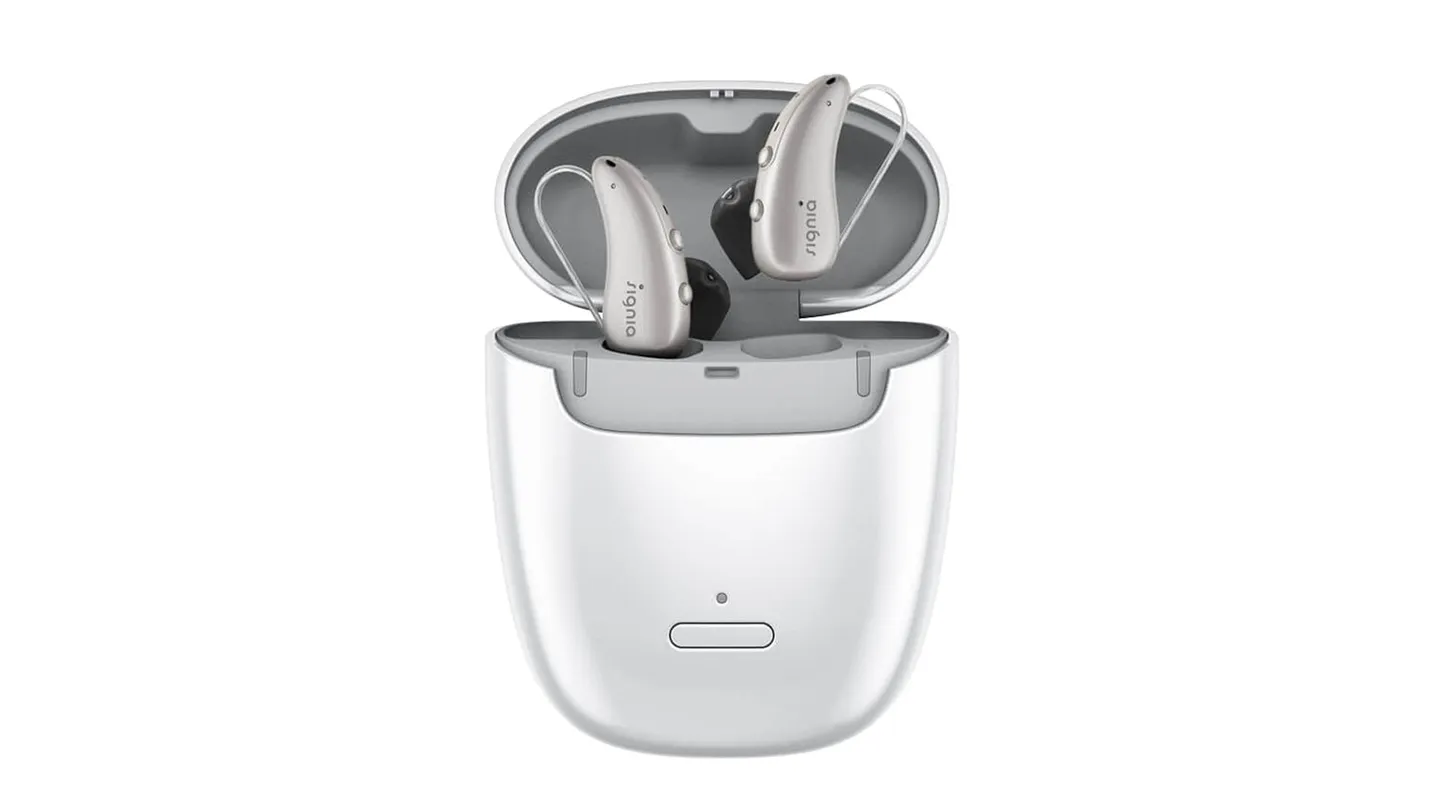
Most NHS hearing aids are behind-the-ear or receiver-in-the-ear models. Other styles, particularly the custom in-ear devices that sit inside the ear canal, generally require private treatment. NHS waiting times can also be longer than those for private hearing care.
How to get referred through your GP
Typically, people who suspect they have hearing difficulties consult their GP first, who may refer them to their local NHS audiology service. Eligibility is assessed on the degree of hearing loss, medical history and the impact the difficulty is having on daily life.
After referral you may be placed on a waiting list before being invited for an NHS hearing test at your local audiology department. If the assessment shows hearing aids would help, a separate appointment is arranged for fitting and programming. (A private comprehensive hearing assessment covers the same ground, without the wait, and is what we offer here.)
Some London areas also run self-referral or Any Qualified Provider routes for adult hearing loss, which let you book an NHS assessment without seeing your GP first. Availability differs from borough to borough, so it is worth asking your practice which route applies to you.
How long you wait for NHS hearing aids in London
Waiting times for NHS hearing aids vary depending on your local NHS trust. Initial hearing assessments are typically offered within six weeks to several months of referral, and the overall process from referral to hearing aid fitting can take between twelve and eighteen weeks, sometimes longer.
Two things are worth knowing. First, waits are trust-specific rather than London-wide, so the figure that matters is your own trust’s, which you can ask for by name when the referral is made. Second, a long wait is not a reason to leave hearing loss untreated: untreated hearing loss affects communication, confidence and listening effort in the meantime, and there is nothing to stop you being assessed privately while you wait.
Which hearing aids the NHS fits, and which it does not
The NHS provides digital hearing aids programmed to your individual hearing needs, generally behind-the-ear devices supplied free of charge through NHS audiology services. The range available varies with the degree of hearing loss and local provision, and colour options can be limited.
Custom-made hearing aids that sit completely within the ear or the ear canal are not routinely available on the NHS, except in specific clinical circumstances such as a significant malformation of the outer ear. If a discreet in-ear device is important to you, that is a genuine reason to look at private hearing aids rather than a sales pitch.
Do the NHS offer rechargeable and Bluetooth hearing aids?
Some NHS departments now fit rechargeable, Bluetooth-enabled aids, and the direction of travel across the service is towards them. It is not universal. Availability depends on your trust’s current supply contract, and many NHS aids still run on disposable batteries, which the NHS provides free through battery collection points and postal schemes.
If all-day rechargeability and direct phone streaming are near the top of your list, ask your department what is actually in their range before assuming, and treat any private clinic that implies the NHS has nothing modern with caution.
Where private care genuinely differs
One of the main benefits of private hearing care is access to independent advice and a wider range of hearing technology. NHS and private hearing aids come from broadly the same major manufacturers, but privately fitted devices typically carry newer microchips with more processing power, more sound channels and more advanced connectivity.
Independent providers can recommend devices from leading manufacturers, including Oticon, Phonak, Starkey and Widex, based on your hearing needs rather than a contracted shortlist. Private aids often add intelligent noise reduction, automatic environmental adjustment and Bluetooth streaming, and they come in styles including discreet in-the-ear and near-invisible options that the NHS does not routinely supply. That lets the solution be matched to your hearing, your lifestyle and your cosmetic preferences. Your audiologist can advise which options suit your hearing and your budget.
Choice across manufacturers
Access to multiple brands matters because each manufacturer processes sound differently, and their strengths differ: one may suit you better for Bluetooth connectivity, another for tinnitus management, another for physical comfort or overall sound quality.
At Clearly Hearing we hold accounts with seven manufacturers, ReSound, Starkey, Phonak, Unitron, Rexton, Signia and Oticon, and choose after your assessment rather than before it. A clinic tied to a single manufacturer starts from the answer and works backwards.
Verified fitting with Real Ear Measurement
Real Ear Measurement places a thin probe microphone in the ear canal alongside the hearing aid and measures the sound actually reaching your eardrum, then adjusts it against a validated prescription target.
Although Real Ear Measurements are not carried out in every clinic, and are not mandatory in every country, they are widely recognised as good practice by professional organisations including the British Society of Audiology and the American Academy of Audiology. The reason is straightforward: measuring your ear is more accurate than relying on the manufacturer software’s prediction of it. Every fitting here is verified this way, at every technology tier.
Appointment length and continuity of clinician
Private appointments are typically longer and less rushed, leaving room for assessment, fitting and ongoing support. Many independent practices also offer continuity of care, so you see the same HCPC-registered audiologist from first assessment through to long-term aftercare.
In practice that means initial assessments of around 60 to 75 minutes, enough for a full discussion of your hearing concerns, listening situations and goals; fitting appointments of a similar length, with time to programme and verify the devices properly; and follow-ups of 30 to 45 minutes for fine-tuning as you adapt.
NHS audiology appointments are generally shorter. After GP referral, the wait for an initial assessment ranges from six weeks to several months depending on local demand. The assessment itself usually takes 45 to 50 minutes and covers a hearing test and medical history. If aids are recommended, a fitting appointment of 45 to 60 minutes follows, covering programming, use and care. A review is normally offered six to twelve weeks later, in person or by telephone, and most services also run quick maintenance appointments for routine problems such as re-tubing or replacing a damaged part.
When the NHS is the right answer
NHS hearing aids are an excellent option for anyone who wants a quality hearing solution with no upfront cost. The NHS provides digital hearing aids on long-term loan alongside ongoing aftercare, repairs and batteries, all free. They suit people with common patterns of hearing loss who are comfortable using standard behind-the-ear devices. NHS audiology also provides a thorough clinical assessment, so any underlying medical concern is identified and managed appropriately.
For straightforward hearing needs, the NHS is frequently the sensible choice. Standard NHS digital aids manage most common types of hearing loss effectively, and they come with ongoing support at no charge. They also give you a risk-free way to find out whether amplification genuinely helps your daily communication before you consider spending anything privately.
We would specifically point you to the NHS if:
- Cost is the deciding factor. A free, well-fitted NHS aid beats a private aid you feel pressured into and cannot comfortably afford.
- Your hearing loss is a straightforward age-related pattern and you are happy with a behind-the-ear device.
- You are not sure yet whether you will wear hearing aids at all. Find out on the NHS first.
- Your listening life is mostly quiet: home, one-to-one conversation, television, occasional company.
- You are already an NHS patient and happy with the care you receive. There is rarely a good reason to change.
Saying this costs us business, and we would rather say it than sell someone a device they did not need.
When private hearing aids are worth paying for
Private hearing aids may suit you better if you want faster access, a wider choice of styles, or the latest technology. Private providers can supply devices from multiple manufacturers, including discreet and custom-made options, with features such as Bluetooth connectivity, intelligent noise reduction and automatic sound adjustment. Private care also tends to include more personalised support: longer appointments, ongoing fine-tuning, and continuity with the same audiologist throughout.
Concretely, private care tends to be worth the money when:
- You cannot wait three or four months, whether for work reasons or because the difficulty is affecting you now.
- You spend your days in demanding listening environments: meetings, restaurants, open-plan offices, busy streets.
- You want a discreet custom in-ear device, which the NHS does not routinely fit.
- Your hearing loss is complex, asymmetrical, or accompanied by tinnitus or balance symptoms and you want unhurried specialist time.
- You value seeing the same clinician each visit, since hearing aid success is built over several fine-tuning appointments rather than on fitting day.
Can you use both? Repairs, batteries and second opinions
There is no requirement to choose. You can keep NHS aids as a backup, wear an NHS aid in one ear and a private device in the other where that is clinically appropriate, or move between the two as your needs change. Choosing private care does not affect your entitlement to NHS audiology, including assessment, hearing aid provision and aftercare.
One practical limit is worth knowing. NHS hearing aids are rarely repaired or adjusted in the private sector. NHS departments provide repairs, maintenance, batteries and aftercare free of charge, and private clinics may not hold the software or equipment needed to service NHS-issued devices. For ongoing support with an NHS aid, go back to your NHS department.
Devices you bought privately are a different matter. Our hearing aid repairs service supports aids from Phonak, Unitron, Widex, Oticon, Starkey, GN ReSound, Signia and Bernafon, including devices bought elsewhere, and we can service, repair and reprogram them.
Second opinions are welcome on either side of the line. If you have been quoted for private aids and want an independent view, bring the quote. If you have NHS aids that have never felt right, an assessment will tell you whether the problem is the device, the fitting or something else in the ear.
How to decide
Start with the assessment, not the price list. You cannot sensibly choose between NHS and private provision until you know the degree and shape of your hearing loss, whether anything needs medical review, and what your real listening demands are.
Then ask yourself two questions. Would a behind-the-ear device at a standard technology level meet your listening life? If yes, the NHS pathway is very likely the right answer. If not, and specifically if you need discretion, higher-tier processing in noise or speed, then look at what private hearing aid prices in London actually buy, and what a fair quote includes.
Whichever route you take, insist on one thing: that the fitting is verified in your own ear. It matters more than the badge on the device.
Frequently asked questions
Can I get the same hearing aids on the NHS that a private audiologist recommends?
Usually not the same model. NHS hearing aids come from the same major manufacturers, but departments buy a contracted range, most often behind-the-ear styles at a standard technology level. Private hearing aids are selected across the whole market, including in-the-ear and custom-moulded styles and higher technology tiers.
Do private hearing aid companies communicate with my GP about my hearing?
Only with your consent. We write to your GP whenever there is a clinical reason, such as asymmetrical hearing loss, sudden loss or an ear that needs medical review, and we can copy you in. Routine private hearing aid fittings are not automatically reported to your GP.
Do the NHS offer rechargeable hearing aids?
Some departments now fit rechargeable and Bluetooth-enabled NHS hearing aids, but availability varies by trust and is not guaranteed. Many NHS aids still use disposable batteries, supplied free. If rechargeability matters to you, ask your local department directly what is in their current contract.
Can I start the NHS referral pathway at the same time as buying private hearing aids?
Yes. Asking your GP for an NHS audiology referral does not affect your right to see a private audiologist, and buying privately does not remove your NHS entitlement. Many people join the NHS waiting list and are assessed privately while they wait.
How often will I have follow-ups if I go through the NHS?
Most NHS departments offer one review around six to twelve weeks after fitting, in person or by telephone, then support on request. Repairs, re-tubing and battery replacement are handled through drop-in or booked maintenance appointments, free of charge, for as long as you use the aids.
Are private hearing aids better than NHS hearing aids?
Not automatically. A well-fitted NHS aid outperforms an expensive private aid that was never verified. What private care reliably adds is choice across manufacturers, discreet and custom styles, higher technology tiers, shorter waits, longer appointments and the same clinician throughout.